
Best CBI Programs in 2026: Quick Answer
The best citizenship by investment programs in 2026 are the five Eastern Caribbean ones: Grenada, St Kitts & Nevis, Dominica, Antigua & Barbuda and Saint Lucia, where no option has cost less than US$200,000 since 1 July 2024 (OECS, checked 18 October 2026). Entry prices run from US$200,000 (Dominica, single applicant) and US$230,000 (Antigua, any family size) to US$235,000 (Grenada), US$240,000 (Saint Lucia) and US$250,000 (St Kitts & Nevis, family of up to four), before government, due-diligence and passport fees. Grenada is the only one whose nationals can apply for a U.S. E-2 investor visa (after 3 years' continuous domicile in Grenada for investment citizens), and since 1 January 2026 the United States has suspended the entry of Antigua & Barbuda and Dominica nationals as immigrants and on visitor, student and exchange visas (Proclamation 10998).
Citizenship by investment (CBI) is a government programme that grants citizenship, and with it a passport, to a person who makes a qualifying donation or investment and passes due diligence, without first having to live in the country. A Golden Visa, by contrast, grants residence, not citizenship.
Key Takeaways
Best overall direct CBI route: Grenada remains the strongest all-round option when a family wants Caribbean citizenship plus U.S. E-2 treaty eligibility: US$235,000 to the National Transformation Fund covers a family of up to four, and the IMA says it approves applications within 60 business days of submission, subject to due diligence (IMA Grenada, checked 18 October 2026).
Best mature program: St Kitts & Nevis is the premium benchmark for applicants who value a long-running official program, clear source-of-funds review, and broad family inclusion over the lowest headline cost.
Best lower-cost direct CBI route: Dominica starts at US$200,000 for a single applicant on the Economic Diversification Fund route, or US$250,000 with up to three qualifying dependants (Dominica CBIU, checked 18 October 2026). Dominica nationals face the 2026 U.S. visa suspension.
Best family entry point: Antigua & Barbuda keeps the National Development Fund contribution at US$230,000 per application whatever the family size; processing fees are US$10,000 for a single applicant and US$20,000 for a family of up to four, plus due diligence (Antigua CIU, checked 18 October 2026). Antigua nationals also face the 2026 U.S. visa suspension.
Best capital-preservation angle: Saint Lucia offers a National Action Bond route from US$300,000 plus a US$50,000 non-refundable administration fee, with a five-year holding period.
Not direct CBI: Portugal, Greece, the UAE, and similar Golden Visa routes are residency-by-investment alternatives. They can lead to citizenship later, but they do not grant immediate nationality.
Best CBI Programs At a Glance
Use this matrix immediately after the quick answer to scan costs, speed, mobility, and family scope side by side. Sort by what matters to you most, like total donation, real estate or bond minimums, or processing time. Then apply filters to surface programs that match your priorities.
| Country | Type | Donation (min; option) | Real Estate / Bonds (min; option) | Processing | Mobility highlights | EU/Schengen? | US E-2?* | China visa-free? | Interview req.? | Physical presence / “genuine link” | Hold period | Tax on worldwide income (non-resident) | Family scope (headline) | Official source / last checked |
|---|---|---|---|---|---|---|---|---|---|---|---|---|---|---|
| Grenada | CBI | US$235,000 NTF (main applicant + up to 3 dependants) | US$270,000 approved project + US$50,000 government contribution | 60 business days (IMA) | Schengen and UK access; U.S. E-2 treaty eligibility. | Yes | Yes* | Yes | Yes | None | — | No | Dependent spouse, children, parents, grandparents, siblings | IMA Grenada; 9 FAM 402.9-10, checked 18 October 2026 |
| St. Kitts & Nevis | CBI | $250,000 (SISC / PBO) | $325,000+ (approved condo; $600k home) | Decision 120-180 days after acknowledgment | Schengen and UK access; broad global mobility; no U.S. E-2 treaty route. | Yes | No | No | Yes | None | 7 yrs (RE) | No | Children under 18, or 18-30 in full-time study; parents 55+ | St Kitts CIU, checked 18 October 2026 |
| Dominica | CBI | $200,000 (EDF; single) | $200,000 (approved RE) + $75,000 government fee | Not published | Schengen and UK access; US B, F, M, J and immigrant visas suspended from 1 Jan 2026. | Yes | No | Yes | Yes (all applicants 16+) | None | 3 yrs (RE) | No | Spouse; Children; Parents/Grandparents | Dominica CBIU; Proclamation 10998, checked 18 October 2026 |
| Antigua & Barbuda | CBI | $230,000 (NDF, any family size) / $260,000 (UWI, family of 6+) | $300,000 (approved RE) | Not published | Schengen and UK access; US B, F, M, J and immigrant visas suspended from 1 Jan 2026. | Yes | No | Yes‡ | Yes | 5 days in 5 years | — | No | Children up to 30; parents/grandparents 55+; unmarried siblings | Antigua CIU; Proclamation 10998, checked 18 October 2026 |
| St. Lucia | CBI | $240,000 (NEF; applicant + up to 3 dependants) | $300,000 RE / $300,000 bond + $50,000 fee | Not published | Schengen and UK access; no U.S. E-2 treaty route. | Yes | No | No | Yes | None | 5 yrs (Bond) | No | Children up to 21 (30 if fully supported); parents 55+; unmarried siblings under 18 | Saint Lucia CIP; CBI (Amendment) Act No. 4 of 2020, checked 18 October 2026 |
| Turkey | CBI | — | $400,000 (RE) | 3–6 months | Regional mobility profile; no Schengen visa-free access. | No | Yes* | No | — | None | 3 yrs (RE) | Yes (if resident) | Children <18 | Invest in Türkiye; 9 FAM 402.9-10, checked 18 October 2026 |
| Malta (MEIN) | CBI | TERMINATED | N/A | N/A | Investor-citizenship route terminated; use current merit/residency guidance. | Program closed | — | — | — | ECJ ruling April 2025 | — | — | MPRP (residency only) still available | CJEU C-181/23; Act XXI of 2025, checked 18 October 2026 |
| Vanuatu | CBI | About $130,000 (DSP; reported) | — | Not verified | EU visa requirement reintroduced from 3 Feb 2025 (Regulation (EU) 2025/11). | No | No | No | — | None | — | No | Spouse; Minor children | Watchlist: verify before filing |
| Egypt | CBI | Not verified | Not verified | Not verified | Limited global mobility; verify current visa access before filing. | No | No | No | — | If resident | — | Yes (if resident) | Spouse; Children | Watchlist: verify before filing |
| Jordan | CBI | Not verified | Not verified | Not verified | Limited global mobility; regional stability use case. | No | No | No | — | If resident | — | Yes (if resident) | Spouse; Children; Parents | Watchlist: verify before filing |
Mobility note: Visa-free access, treaty eligibility, and country-entry rules can change. Verify current travel access with official sources before filing.
How to read it:
- Processing reflects typical end-to-end time after complete file submission, not counting document prep.
- Schengen/EU indicates current visa-free access or full EU rights where applicable.
- E-2 notes treaty eligibility only. Final approval depends on a viable U.S. business, consular discretion, and personal eligibility.
- Family scope summarises age limits and whether parents or siblings can be included.
Which Program Should You Choose?
Deciding between a citizenship-by-investment or residency-by-investment route is ultimately a personal choice, shaped by your goals, lifestyle, and tolerance for trade-offs. Thinking in terms of archetypes, or profiles that reflect your core values, is the most effective way to navigate through the complexity.
Some investors place their families first, prioritising programs that extend benefits to children, parents, or even siblings. Others are entrepreneurs who see citizenship or residency as a tool to unlock new markets, banking access, or smoother entry into major economies.
Then there are those driven by speed, who want a second passport as quickly as possible, while others are more cautious, aiming to preserve capital or hedge against policy shifts.
By matching yourself to an archetype, you can quickly narrow the field without getting lost in program-by-program details. A family-focused applicant might tolerate a longer process if it means securing education and healthcare access for dependants.
A global traveller might accept higher costs in exchange for stronger visa-free mobility. A budget-conscious investor, meanwhile, will weigh entry-level donations more heavily than long-term EU integration.
What’s your top priority?
- Family You want an option that covers spouses, kids, and maybe even parents. Minor delays are fine if everyone’s included. Just watch age limits and dependent rules.
- Mobility Your goal is global visa-free travel; think Schengen, the UK, and maybe even the U.S. Be ready to pay more or face stricter checks.
- Speed You need things done fast. Programs with quicker processing (a few months vs. years) are your focus, even if they cost more or are stricter.
- Budget You want access at a lower cost. Donation-based or starter residency routes appeal, but make sure to count all costs, not just the headline price.
- Capital Preservation Your priority is keeping your money safe. Look for refundable routes, real estate, funds, or bonds. Check how and when your money can come back.
This simple chooser helps readers map their top priority to a decision pathway. It’s not about memorising every program; it’s about clarifying which type of solution best aligns with your circumstances.
Once you know your archetype, program comparisons and details become far easier to navigate.
Best Direct CBI Programs in 2026
Below are the direct citizenship-by-investment routes worth comparing first, ordered to match the recommendation logic above.
Use these dossiers as quick-scan cards: they highlight minimum investments, timelines, family rules, passport strength, and who each program suits best.
Grenada: “E-2 Gateway to the USA”
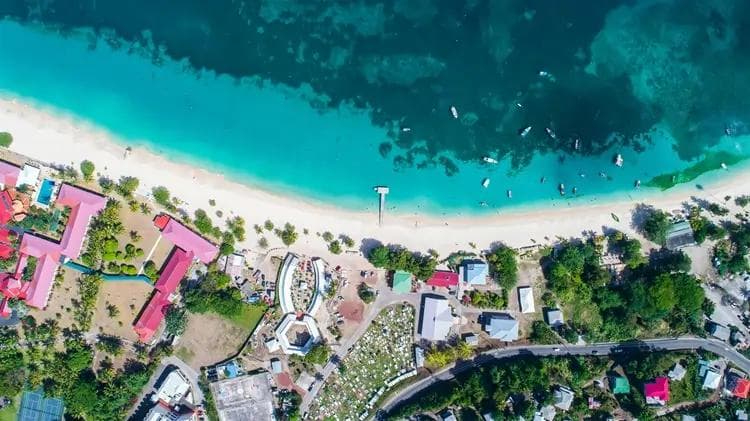
Aerial view of Grand Anse Beach in Grenada
Grenada’s program is the go-to for investors who want real mobility plus a practical path into the U.S. business ecosystem.
It is the only Caribbean CBI with a U.S. E-2 treaty, so qualified nationals can apply for an E-2 investor visa after obtaining citizenship and making a bona fide U.S. business investment. The treaty has been in force since 3 March 1989 (9 FAM 402.9-10). Investment citizens who have never held E status must first be domiciled in Grenada for a continuous period of at least 3 years (8 U.S.C. 1101(a)(15)(E), since 23 December 2022).
Add in broad family coverage, and Grenada stands out as a strategic, entrepreneur-friendly choice.
Key Facts
- Investment options: US$235,000 to the National Transformation Fund for a main applicant with up to three dependants, or at least US$270,000 in a government-approved project plus a US$50,000 government contribution (IMA Grenada, checked 18 October 2026). Fees come on top, including a US$1,500 application fee and US$5,000 due diligence for each applicant aged 17 or over.
- Processing time: the IMA says applications are approved within 60 business days of submission, subject to due diligence and receipt of funds; an online interview is part of due diligence.
- Family coverage: the IMA lists a spouse, children, parents, grandparents and siblings who are financially dependent on the main applicant.
- Passport strength: visa-free travel to the Schengen area and the UK; check each destination's current rules before you travel.
- The E-2 advantage: Grenada has had an E-2 investor treaty with the United States since 3 March 1989 (9 FAM 402.9-10, checked 18 October 2026). The E-2 visa is available to Grenadian nationals who invest in and direct a U.S. enterprise, and approval depends on the investment, the business and the consular decision. Since 23 December 2022, anyone who became Grenadian through investment and has never held E status must first have been domiciled in Grenada for a continuous period of at least 3 years (8 U.S.C. 1101(a)(15)(E)). Our Grenada E-2 visa guide covers the conditions.
What’s Changed Recently
- Since 1 July 2024, the five Eastern Caribbean CBI states have applied a US$200,000 minimum to every CBI option (OECS release, 22 June 2024)
- Tighter due diligence and interview policies across the Caribbean aimed at reinforcing program integrity
- Ongoing refinements to documentation and source-of-funds standards
- IMA Grenada commissioned an independent review of the programme, run by Caribbean Analytics from September to October 2026, with findings going to the IMA board and a public summary to follow (IMA Grenada press release, 22 September 2026). Current fees and dependant rules are on the IMA's Becoming a Citizen page.
- A regional regulator, the Eastern Caribbean Citizenship by Investment Regulatory Authority (ECCIRA), published its establishing agreement on 14 August 2026; its draft standards were not yet published on 18 October 2026.
Best Suited For
Entrepreneurs planning to launch or acquire a U.S. business using the E-2 route Families that value generous dependent rules and strong travel rights Investors seeking a balanced cost-to-mobility profile without relocating
St. Kitts & Nevis: “Platinum Standard”
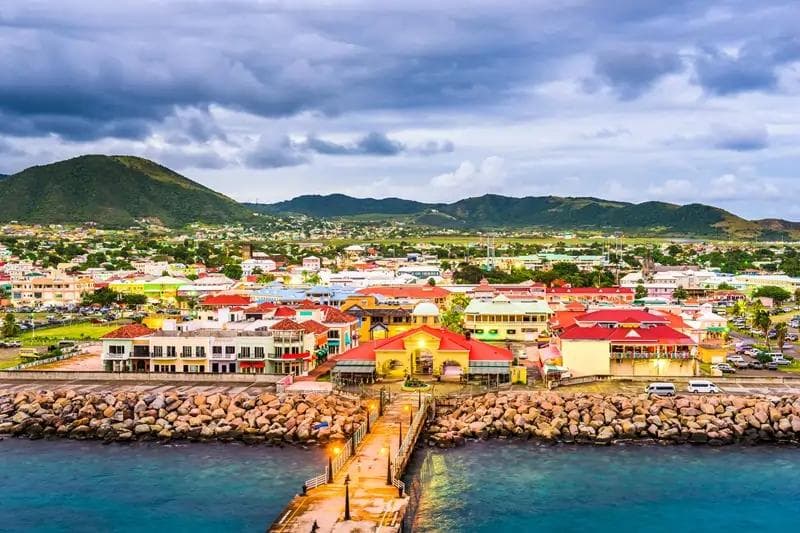
The colorful waterfront of Basseterre, St. Kitts
Often called the birthplace of the modern CBI industry, Saint Kitts & Nevis is known as the “Platinum Standard”.
Established in 1984 and running for more than 40 years, it stands out for stability, strong compliance, and a passport that opens doors worldwide.
Key Facts
- Investment options: US$250,000 Sustainable Island State Contribution for a main applicant or family of up to four (US$25,000 per extra dependant under 18, US$50,000 per extra dependant 18 or over), or approved real estate from US$325,000 (condominium or share) or US$600,000 (single-family home), resellable after 7 years (St Kitts CIU, checked 18 October 2026).
- Processing time: within 120-180 days of acknowledging an application, the CIU says whether it is approved in principle, denied or delayed for cause.
- Family coverage: a spouse, children under 18, children aged 18-30 in full-time study and fully supported, and parents of the applicant or spouse aged 55 or over who live with and are supported by the applicant.
- Passport strength: visa-free travel to the UK and the Schengen area; destination counts vary by index and change.
What’s Changed Recently
- Stronger due diligence introduced
- Biometric enrolment has been mandatory for new applications since 14 April 2026, and existing citizens by investment must enrol by 31 July 2027, when older passports stop being valid for travel (St Kitts CIU)
- Higher emphasis on transparency and reputation
Best Suited For
Families who want multi-generational inclusion Investors prioritise program credibility and global recognition. Applicants seeking a balance between cost and mobility
Dominica: “Best for Solo Budget”

Roseau, the colorful capital city of Dominica with cruise ships along the Caribbean coast
Dominica is the classic value choice for single applicants who want a reputable Caribbean passport without unnecessary add-ons.
The program is straightforward and widely recognised and keeps total entry costs competitive while still offering solid mobility and dependable processing.
Key Facts
- Investment options: a US$200,000 Economic Diversification Fund contribution for a single applicant (US$250,000 with up to three qualifying dependants), or at least US$200,000 in approved real estate held for 3 years plus a US$75,000 government fee for the main applicant (Dominica CBIU, checked 18 October 2026).
- Processing time: the CBIU does not publish a standard time; every applicant aged 16 or over has a mandatory interview
- Family coverage: spouse, dependent children, and often parents or grandparents.
- Passport strength: broad visa-free access, including Schengen and the UK, with strong regional coverage that fits frequent travel needs.
What’s Changed Recently
- The Caribbean has recently implemented stricter due diligence measures, which include mandatory interviews and higher document standards.
- Donation and fee structures updated to align more closely with regional benchmarks while maintaining Dominica’s value positioning
- From 1 January 2026, a U.S. presidential proclamation suspended the entry of Dominica nationals as immigrants and on B-1, B-2, F, M and J visas, citing CBI without residency, and told consulates to shorten other visas (Proclamation 10998, 90 FR 59717).
Best Suited For
Solo applicants or couples prioritise a lower all-in cost. Investors who want a clean, uncomplicated route with predictable timelines. Applicants seeking reliable mobility without the higher pricing of premium tiers.
Antigua & Barbuda: “Best for Families”
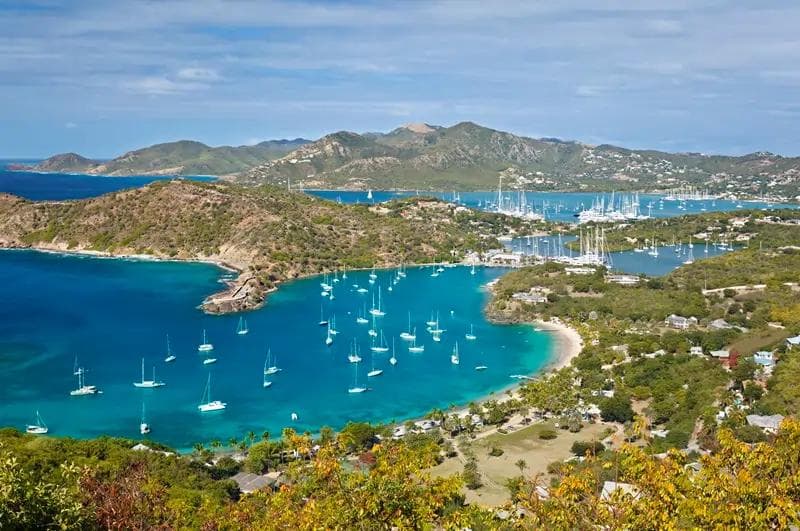
Aerial view of English Harbor in Antigua, known for its turquoise waters and sailing yachts
Antigua & Barbuda is the family favourite. Generous dependent rules, a value-focused donation route, and the unique University of the West Indies (UWI) option make it especially attractive for larger households who want one application to cover everyone.
Key Facts
- Investment options: a US$230,000 National Development Fund contribution per application, with no extra contribution for a spouse, dependent children or parents over 55; the UWI Fund option at US$260,000 for a family of six or more; or approved real estate from US$300,000, held for 5 years (Antigua CIU).
- Processing time: the CIU does not publish a standard time, and real estate files can take longer
- Family coverage: a spouse, financially dependent children aged 0-30, parents or grandparents aged 55 or over, and unmarried siblings.
- Passport strength: broad visa-free access, including Schengen and the UK, plus additional regional agreements that support frequent travellers.
What’s Changed Recently
- Regional alignment that set donation thresholds at US$200,000 or higher
- Stronger due diligence and documentation standards in line with Caribbean-wide measures
- Citizenship can be removed if you do not spend at least 5 days in Antigua & Barbuda in the five calendar years after it is granted (Antigua CIU)
- The same proclamation covers Antigua & Barbuda from 1 January 2026. Antigua's ambassador to the U.S. says visas issued before then remain valid (Antigua CIU statement, 19 December 2025).
Best Suited For
Families that want to include multiple dependants in one application Parents who value the UWI educational tie-in for larger households Cost-conscious applicants who still want solid mobility and straightforward processing
St. Lucia: “Capital Preservation (Gov’t Bonds)”
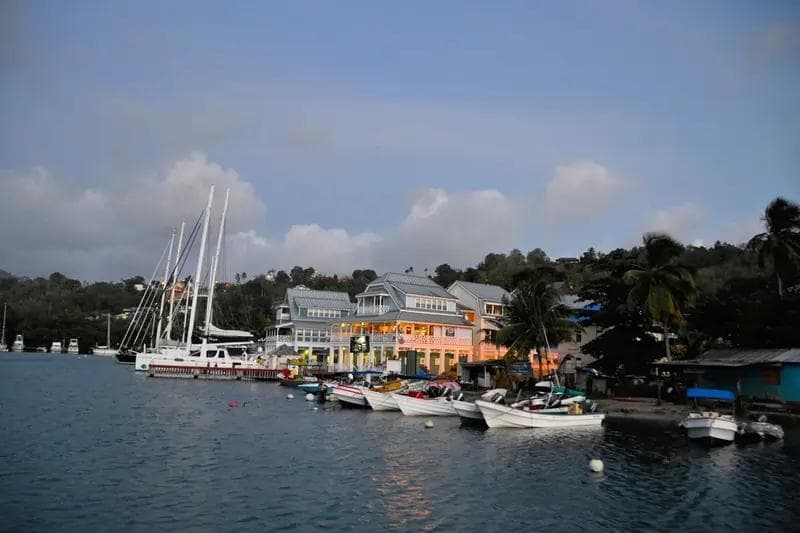
Marigot Bay in St. Lucia, a popular Caribbean marina
St Lucia is the flexible option in the Caribbean, popular with investors who want choices beyond a straight donation.
The government bond route is the headline draw for capital preservers, giving a clear path to citizenship while parking funds in a state instrument for a fixed period.
Add steady processing and broad family coverage, and St Lucia feels tailored for planners who value options.
Key Facts
- Investment options: National Economic Fund from US$240,000 for the applicant alone with up to three dependants, or National Action Bond from US$300,000 plus a US$50,000 non-refundable administration fee with a five-year holding period.
- Processing time: the CIP does not publish a standard time
- Family coverage: a spouse, children aged 21 or under (up to 30 if fully supported), parents over 55 who are fully supported, and unmarried siblings under 18 (Citizenship by Investment (Amendment) Act No. 4 of 2020)
- Passport strength: strong visa-free coverage, including Schengen and the UK
- Capital angle: bond option designed for investors who prefer a refundable pathway after the hold
What’s Changed Recently
- Regional alignment on higher donation baselines across the Caribbean, with Saint Lucia's NEF route now from US$240,000
- Tighter due diligence standards, with more emphasis on interviews and enhanced documentation
- Clearer guidance on bond holding periods and exit steps
Best Suited For
Investors who want to preserve capital through a bond route rather than a pure donation Families need flexible dependent rules without sacrificing mobility. Applicants comfortable with a steadier timeline in exchange for a refundable path
Turkey: “Property-Led, Fast, Strategic Hub”
The iconic Süleymaniye Mosque overlooking the cityscape of Istanbul, Turkey
Turkey is the heavyweight for investors who want a real home base, quick processing, and a vibrant market.
The Turkish CBI program is anchored in property, with Istanbul offering deep rental demand, strong connectivity across Europe, the Middle East, and Central Asia, and a lifestyle many families actively choose.
Travel rights are more modest than EU options, but the combination of speed, scale, and real assets makes Turkey a practical pick.
Key Facts
- Investment options: the primary pathway is USD 400,000 in qualifying real estate, held for a fixed period.
- Processing time: commonly 3 to 6 months, subject to document quality and valuations.
- Family eligibility: typically a spouse and children under 18 qualify within the same file.
- Passport strength: a mid-tier travel profile with broad regional access; no Schengen but has U.S. E-2 treaty access in this context.
- Hold period: property must be kept for 3 years, with encumbrance limits recorded on the title.
What’s Changed Recently
- The real estate threshold has remained at USD 400,000 since 2022.
- Valuation and compliance checks have tightened to curb inflated appraisals and ensure genuine transactions.
- Source-of-funds scrutiny is stronger, so clean documentation is essential.
Best Suited For
Investors who want a property-backed route with a tangible asset in a deep market Families seeking a fast timeline and a cosmopolitan base with strong air links Applicants who value lifestyle and business access over top-tier visa-free mobility
How We Ranked and Verified These Programs
Ranking methodology
We rank direct CBI programs first, then separate residency alternatives. The scoring criteria are legal certainty and compliance, mobility, all-in cost, processing predictability, family suitability, capital preservation, and special access such as U.S. E-2 treaty eligibility or China visa-free access.
Official source matrix
Investment figures below are starting points only. Government fees, due diligence, professional fees, document costs, and family composition can change the final budget. The last column names the official source; the Caribbean rows were re-checked on 18 October 2026.
| Program | Status | Starting route | Typical timing | Family / presence notes | Official source and check date |
|---|---|---|---|---|---|
| Grenada | Active direct CBI | NTF from US$235,000 (main applicant + up to 3 dependants); approved project from US$270,000 plus a US$50,000 government contribution. | IMA says approval within 60 business days of submission, subject to due diligence. | Family inclusion available. Grenadian nationality can support a later U.S. E-2 visa application, subject to U.S. consular approval. | IMA Grenada; 9 FAM 402.9-10, checked 18 October 2026 |
| St Kitts & Nevis | Active direct CBI | SISC from US$250,000 for main applicant or family up to four; approved real estate from US$325,000. | CIU guidance states 120-180 days after acknowledgment for SISC files. | Family inclusion available. Main applicants must attend an interview; dependants aged 16+ may be interviewed if required. | St Kitts CIU, checked 18 October 2026 |
| Dominica | Active direct CBI | Economic Diversification Fund from US$200,000 for the main applicant; US$250,000 for main applicant plus up to three qualifying dependants. | Usually several months after a complete file and due diligence; extra checks can extend timing. | Dependants can include spouses, children, parents, and grandparents where they meet the rules. Applicants aged 16+ have interview and due-diligence costs. | Dominica CBIU, checked 18 October 2026 |
| Antigua & Barbuda | Active direct CBI | National Development Fund contribution of US$230,000 per application, whatever the family size; processing fees are US$10,000 (single) or US$20,000 (family of up to four), plus due diligence. | Timing depends on due diligence and complete documents. | Spouse, dependent children, and dependent parents over 55 can be included. Oath or affirmation is required on the first visit or through an official mission. | Antigua CIU, checked 18 October 2026 |
| Saint Lucia | Active direct CBI | National Economic Fund from US$240,000 for applicant alone with up to three dependants; National Action Bond from US$300,000 plus a US$50,000 administration fee. | Processing depends on complete documents, due diligence, and interview/identity verification. | Family inclusion available. National Action Bonds must be held for five years from first issue. | Saint Lucia CIP, checked 18 October 2026 |
| Turkey | Active citizenship-by-investment route | Real estate route from USD 400,000, subject to valuation, title, and holding rules. | Often measured in months, subject to government checks and property transfer steps. | Typically spouse and minor children can be included. Turkey also appears on the U.S. E-2 treaty list. | Invest in Türkiye, checked 18 October 2026 |
| Malta | No fixed-price direct CBI | Investor citizenship model ended after the ECJ ruling. Malta now uses a discretionary merit naturalisation framework. | Not comparable with Caribbean CBI timelines. | Case-by-case, national-interest assessment. No guaranteed payment-to-passport route. | CJEU C-181/23; Act XXI of 2025, checked 18 October 2026 |
| Austria | Exceptional naturalisation only | No published investment minimum and no standard CBI program. | Highly variable. | Only suitable for applicants with exceptional, documented public-interest contributions. | Austria BMI, checked June 18, 2026 |
Residency alternatives are not ranked as CBI
Golden Visa and residency-by-investment programs can still be useful for families that want a future base, Schengen access, or a longer naturalisation path. They belong in a separate decision set because they grant residence first, not immediate citizenship. For those routes, start with the Golden Visa countries guide.
Portugal is the usual comparison. Its Golden Visa is a residence permit, not citizenship: the fund route needs at least €500,000 in qualifying Portuguese investment funds, and AIMA charges €6,946.30 per applicant for the first permit (AIMA fee table applied from 1 March 2026, as listed on our pricing page). With Movingto, the Portugal Golden Visa service is €6,000 flat whichever qualifying fund you choose, covering legal assistance, Movingto administration, bank account opening and your NIF; AIMA fees are extra, and Movingto may receive commissions from some funds (how Movingto gets paid).
Movingto is a Portugal-first immigration firm that puts a named, Bar-registered lawyer from its in-house legal team on your case and publishes its fees.
On the citizenship side, Movingto works on Grenada citizenship by investment: see our Grenada citizenship by investment guide, the Grenada CBI statistics or ask about Grenada citizenship.
What Is Citizenship by Investment and How It Differs from Golden Visas
When people first encounter the concept of “investment migration”, the terms can seem confusing. The two most common routes are citizenship by investment (CBI) and residency by investment (RBI), often called Golden Visas.
Both involve capital, but what you actually receive in return is completely unique. Here’s the distinction at a glance:
- Citizenship by Investment (CBI) is the process of obtaining full legal nationality in a country by making a qualifying financial contribution, usually through a donation to a national fund or an approved real estate purchase. Successful applicants receive a passport and the full rights of citizenship, often within months.
- Golden Visas (Residency by Investment, RBI) are different. They grant legal residence, not immediate citizenship. Residency can later lead to naturalisation, but only after meeting physical presence requirements, language tests, or cultural integration standards. Portugal, Greece, and the UAE all operate RBI schemes with their own pathways and conditions, making them suitable for those willing to establish a longer-term footprint.
Timelines matter. Official CBI timelines are counted in months (Grenada targets 60 business days; St Kitts gives a decision within 120-180 days of acknowledgment), while Golden Visas lead to citizenship only after years of residence.
- CBI suits investors seeking speed and direct global mobility.
- RBI is better for those aiming for deeper ties, broader EU access, or countries that don’t offer citizenship outright.
What You Gain: The Benefits of CBI
So why do investors still commit hundreds of thousands of dollars to these programs each year? The answer lies in the tangible advantages CBI offers to individuals and families.
Beyond the prestige of a second passport, these benefits touch on mobility, security, business access, and long-term wealth planning: Global mobility: Caribbean passports unlock Schengen travel for up to 90 days in 180; Grenada uniquely enables access to the U.S. via its
E-2 treaty, making it a standout for entrepreneurs.
Family security: Programs often extend to spouses, children, and sometimes parents or siblings, allowing for multigenerational planning under one application.
Business access: Beyond visa-free travel, CBI opens banking channels, investment rights, and sometimes tax incentives for non-residents.
Lifestyle and education
: Families benefit from access to international schools, universities, and safer relocation options.
Wealth preservation: While most programs don’t eliminate taxes, some offer strategic advantages such as no inheritance or capital gains taxes for non-residents.
Practical caveats: Expect costs beyond the advertised donation (due diligence, legal, and processing fees). Enhanced vetting and shifting visa-waiver agreements mean today’s benefits can tighten tomorrow.
Taken together, these advantages explain why CBI remains attractive despite rising costs and tighter rules, offering both immediate mobility and long-term resilience for investors.
The CBI Market in Transition: 2026 Snapshot
The global citizenship and residency landscape looks very different from just a few years ago. Under a Memorandum of Agreement, the five Eastern Caribbean CBI states have applied a US$200,000 minimum to every CBI option since 1 July 2024, and in 2026 they set up a regional regulator, ECCIRA.
At the same time, the European Union has stepped up pressure on member states, pushing for stricter vetting and genuine-link requirements.
On the residency side, Spain has officially shut the door on property-based Golden Visas, Portugal has removed real estate from its program in favour of fund and cultural routes, and Greece continues to attract investors but at higher investment thresholds.
Meanwhile, programs in Cyprus and Montenegro have been closed entirely, reflecting the tightening environment.
| Program (Country) | Type | Status | Change Type | Current status and 2026 note | Effective Date | Last Verified |
|---|---|---|---|---|---|---|
| St. Kitts & Nevis | CBI | Active | Price increase | Minimum non-refundable contribution raised to $250,000 | 2023–2024 | 18 October 2026 |
| Grenada | CBI | Active | Price harmonization | NTF from US$235,000; approved project from US$270,000 plus a US$50,000 government contribution. | July 2024 | 18 October 2026 |
| Dominica | CBI | Active | Price harmonization | EDF starts at US$200,000 for a main applicant; US$250,000 for a main applicant plus up to three qualifying dependants. | July 2024 | 18 October 2026 |
| Antigua & Barbuda | CBI | Active | Price harmonization | National Development Fund starts at US$230,000 for a single applicant or family up to four; UWI option starts at US$260,000 for larger families. | July 2024 | 18 October 2026 |
| St. Lucia | CBI | Active | Price harmonization | National Economic Fund starts at US$240,000 for an applicant with up to three dependants; National Action Bond starts at US$300,000 plus a US$50,000 administration fee. | July 2024 | 18 October 2026 |
| Malta (MEIN) | CBI | Terminated | Program closed | CJEU ruled the scheme unlawful on 29 April 2025; Act XXI of 2025 followed in July; only MPRP (residency) remains | April 2025 | 18 October 2026 |
| Turkey | CBI | Active | Threshold maintained | Real estate minimum remains $400,000 | 2022 | 18 October 2026 |
| Portugal (RBI) | RBI | Significantly changed | Route removed | Real estate route closed for new applicants | Oct 2023 | June 18, 2026 |
| Spain (RBI) | RBI | Significantly changed | Route closed | Property-based route closed for new applicants | Apr 3, 2025 | June 18, 2026 |
| Greece (RBI) | RBI | Significantly changed | Threshold increase | Real estate minimum €400k–€800k in key areas | 2024 | June 18, 2026 |
| Vanuatu | CBI | Active (risk flagged) | EU visa requirement reintroduced | Regulation (EU) 2025/11 moved Vanuatu to the EU visa-required list; program continues | Feb 2025 | 18 October 2026 |
| Nauru | CBI | Active (new) | New program launch | Launched Economic & Climate Resilience Citizenship Program | Nov 2024 | June 18, 2026 |
| Montenegro | CBI | Closed | Program terminated | Program officially closed | Dec 2022 | June 18, 2026 |
| Cyprus | CBI | Closed | Program terminated | Program officially closed | Nov 2020 | June 18, 2026 |
| Ireland (RBI) | RBI | Closed |
This transition phase underscores an important point for investors: while opportunities remain, they are fewer and often more complex.
The CBI and RBI markets are no longer about simply buying a passport or residence permit; they now require careful navigation of evolving regulations, timelines, and costs.
Exceptional / Discretionary Citizenship Routes
These routes can matter for exceptional applicants, but they should not sit inside the normal direct-CBI ranking. They are discretionary, legally narrow, or no longer comparable with Caribbean CBI pricing and timelines.
Malta: Discretionary Merit Naturalisation

A traditional street in the historical center of Valletta, Malta
Malta used to operate an investor citizenship route with fixed financial thresholds and a 12 to 36 month residence track. In April 2025, the European Court of Justice ruled that Malta’s investor-citizenship scheme was incompatible with EU law, effectively ending the transaction-based model.
The government has pivoted to a merit-based naturalisation framework that is discretionary and grounded in national interest rather than a fixed “investment equals passport” formula.
Key facts
- Status: No direct “cash-for-passport” route. Malta now operates Granting of Citizenship by Naturalisation on the basis of Merit Regulations, a discretionary path that replaces the investor scheme.
- Currently, candidates can be considered for citizenship if they provide exceptional services or make significant contributions to Malta’s national interest. This is assessed case by case and is not priced or guaranteed. Administrative handling sits with the Community Malta Agency.
- EU outcome: Successful applicants obtain full EU citizenship with freedom to live and work across the EU.
What changed recently
- ECJ ruling, 29 April 2025: The Court held that investor citizenship, framed as a commercial transaction, undermines the nature of Union citizenship. Malta cannot grant citizenship purely in exchange for predetermined payments.
- New legal basis: Malta amended its Citizenship Act through the Maltese Citizenship (Amendment) Act, 2025 (Act XXI of 2025), in force 24 July 2025. What remains is discretionary naturalisation for exceptional services or merit, not an investment route.
Best suited for
Ultra-selective applicants who can demonstrate exceptional merit or contributions aligned with Malta’s public interest and who value full EU rights over speed or price predictability. Families who are willing to pursue a discretionary route with rigorous vetting rather than a defined payment model.
Austria: Exceptional Naturalisation Only

The picturesque lakeside village of Hallstatt in Austria
Austria is often marketed as a citizenship by investment route, but in practice it is a citizenship for exceptional services framework. There is no published price tag, no guaranteed outcome, and approvals are rare.
Applications are assessed case by case in the national interest, which makes Austria an option only for a narrow set of applicants who can demonstrate extraordinary contribution, job creation, or comparable benefits to the Republic.
Austrian citizenship is EU citizenship, so a successful applicant can live and work anywhere in the European Union.
Key Facts
- Pathway: No fixed investment track. Citizenship can be granted for exceptional achievements or a significant, demonstrable benefit to Austria, typically under the national interest provision. Intermediaries cannot guarantee approval.
- Processing time: Highly variable, often long, given multi-level review and federal approval stages.
- Family eligibility: Spouse and minor children may be included depending on the case, subject to government discretion.
- Passport strength: Full EU citizenship with the right to live and work across the European Union, plus a top-tier travel profile.
- Dual citizenship nuance: Austria generally restricts dual nationality, but exemptions can be made in the public interest in exceptional cases.
What’s Changed Recently
- Policy remains tightly controlled with an emphasis on rigorous due diligence, clear public benefit, and reputational safeguards. There are no official minimums and no simplified “investment equals passport” route.
Best Suited For
Ultra-high-net-worth applicants with verifiable, large-scale economic or cultural contributions that align with Austria’s national priorities Individuals prepared for a lengthy, confidential, and highly discretionary process with no guarantee of approval Those who value full EU rights above speed or cost predictability
Not Direct CBI, Closed, or Watchlist Programs
These options are useful context, but they should not be treated as primary direct-CBI recommendations. Some are closed, residency-first, under mobility pressure, or more selective than mainstream Caribbean programs.
Montenegro: Closed CBI Route / Residency-First Watchlist
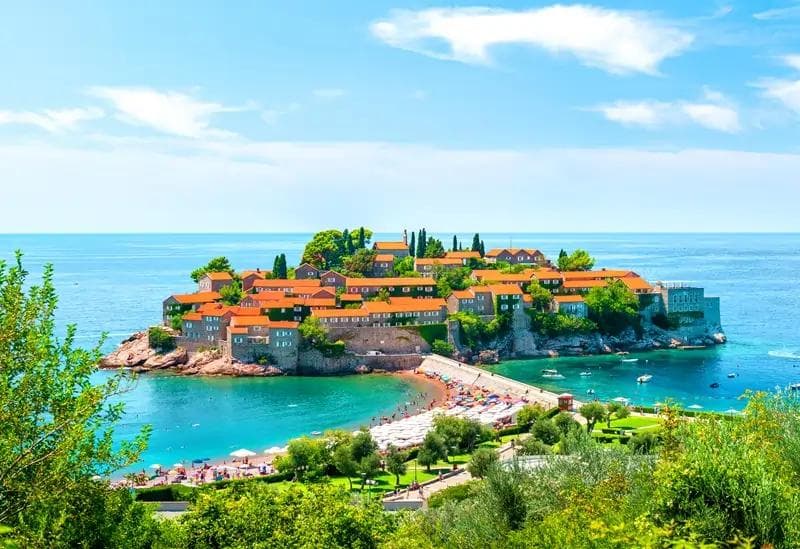
The famous island of Sveti Stefan in Montenegro, a luxury resort on the Adriatic coast
Montenegro has been a favourite for investors who love the Adriatic lifestyle and see long-term potential in an EU-candidate country. Important reality check: the citizenship by investment program ended in December 2022 and has not been reopened.
Today, Montenegro is a residency-first destination. You can still live, work, and invest there through standard residence pathways, but there is no active CBI route.
Key Facts
- Status today: No citizenship by investment. Residency is available through employment, business setup, study, or other standard grounds.
- Historical note: The former CBI required a donation component plus approved real estate. It closed in 2022 amid regional and EU scrutiny.
- Why people still look at Montenegro: Quality of life on the Adriatic, relatively attractive cost of living, and long-term EU accession prospects.
- What this means for you: If you want a second passport quickly, look to active CBI jurisdictions. If you want a Mediterranean base with potential upside, consider Montenegro residency and a multi-year plan.
What’s Changed Recently
- The CBI closure has held. Authorities are focused on compliance and alignment with EU expectations.
- Real estate remains popular for lifestyle and yield, but it does not offer a direct citizenship track.
Best Suited For
Investors prioritising lifestyle on the Adriatic and willing to build ties through residency Families who value schooling and a slower, more organic route to integration Long-view planners who see potential in Montenegro’s EU trajectory rather than immediate passport goals
Other CBI Watchlist Programs: Vanuatu, Egypt, Jordan
Vanuatu
A donation-based route, often marketed on speed. The trade-off is mobility: the EU reintroduced the visa requirement for all Vanuatu nationals with Regulation (EU) 2025/11, in force from 3 February 2025, after its citizenship schemes were found to create security risks (EUR-Lex, checked 18 October 2026). Vanuatu's official programme site did not respond when we checked, so confirm current amounts with an authorised agent.
Those seeking speed and simplicity, especially those focussing on regional destinations instead of the entire EU, can benefit from this option.
Egypt
Positioned as a flexible option tied to investment, deposit, or real estate mechanisms set by cabinet decree. Timelines can vary, and policy language is formal, so applicants should expect strict source-of-funds checks and careful documentation.
This option is suitable for investors seeking a base in North Africa and who are comfortable navigating a process that is driven by rules and requires extensive documentation.
Jordan
A discretionary, investment-linked pathway focused on job creation, treasury instruments, or qualifying real estate. It is selective and designed to channel capital into the domestic economy rather than operate as a volume CBI.
Good for: applicants prioritising stability in the Middle East and prepared for higher thresholds with a more hands-on approval process.
Costs & Timeline
Think of your expenses as logistics, not just price. The headline donation or investment is only the starting figure.
Your final outlay and end-to-end timing depend on paperwork quality, due diligence findings, and how quickly you respond to follow-ups.
What drives the real cost?
Your total budget usually includes the headline amount you see on brochures, plus government charges for due diligence, processing and passports, professional fees for licensed agents and lawyers, and third-party expenses such as police certificates, translations, apostilles, couriers, and bank wires.
If you pick property, add valuation and closing costs, local taxes, HOA and maintenance, and resale commissions. Smart planners keep a 10–15% buffer so updates or rework do not derail the plan.
Quick maths:
- Single applicant, Antigua & Barbuda: US$230,000 contribution, US$10,000 processing fee and US$8,500 due diligence, plus the passport fee (Antigua CIU, checked 18 October 2026).
- Family of four, St Kitts & Nevis: the US$250,000 contribution covers up to four people, plus due diligence of US$10,000 for the main applicant and US$7,500 for each dependant aged 16 or over (St Kitts CIU). Other programmes add per-person fees in the same way, so price your exact family.
The timeline that actually happens
After document prep, most files run through KYC, submission, due diligence, and then issuance.
The step durations below are rough planning estimates, not official figures; only the official units' own timelines (such as Grenada's 60 business days) are published.
- Gather documents and plan SOF trail (1–2 weeks)
- KYC onboarding and compliance checks (a few days)
- Legalisations, translations, apostilles, bank letters (2–6 weeks)
- Government submission and initial screening (1–2 weeks)
- Core due diligence and any interview or clarifications (90–180 days)
- Approval in principle was issued (variable).
- Settle a donation or investment, register property, or subscribe to a bond (2–4 weeks).
- Oath or declaration, then passport printing and delivery (2–8 weeks)
Documents you should expect
Most programs ask for the same core pack. Start early so validity windows do not expire mid-process.
Valid Passports & Civil Documents
Passports for all applicants, along with birth and marriage certificates, plus proof of address.
Police Clearances
Each adult must provide clearance from every country where they hold citizenship or long-term residence.
Financial Records
Recent bank statements, employment letters or contracts, salary slips, and tax returns.
Source of Funds
Clear evidence showing the path of money from its origin to the escrow account.
Company Documents
For business owners: incorporation papers, share registers, audited financials, and dividend records.
Translations & Legalisations
Certified translations and apostilles, where required.
Tips that keep files moving
- Please prioritise ordering police certificates, as they require time to process and have a short validity period.
- Keep names, dates, and addresses identical across every document.
- Map the wire path in advance and avoid third-party senders.
- Make sure bank flows match what appears on tax filings.
- Answer government follow-ups within 48 hours with complete evidence.
Ready-to-file checklist
A short pre-flight avoids costly resets later.
Route Alignment
The route chosen matches your goals in terms of cost, speed, and mobility.
Document Pack
The complete document pack has been assembled, translated, and apostilled.
Source of Funds
Source-of-funds trail documented end to end.
Lock these basics in and the process stops feeling mysterious. With a realistic budget, a clean document pack, and a clear timeline, you can compare programs on substance instead of marketing.
From here, use the Master Matrix and the program dossiers to choose the route that fits your goals with the fewest surprises.
Risks & Scrutiny: The Unvarnished Truth
CBI and RBI are under a brighter spotlight than ever. Regulators care about who gets in, how money moves, and whether applicants have any real link to the country.
Programs respond with tighter checks, interviews, and rule changes that can affect timelines and travel privileges.
Red Flags and Safeguards
| Risk area | Why regulators care | Where it matters most | What applicants may face | How to mitigate | Status |
|---|---|---|---|---|---|
| Insufficient vetting | Prevent illicit actors and identity risk | All Caribbean CBI, discretionary EU cases | Longer due diligence, higher fees, possible interviews | Provide full source-of-funds trail, consistent filings, quick replies | Strengthened |
| Lack of genuine link | Citizenship should reflect ties, not a transaction | EU facing programs, some RBIs with path to citizenship | Physical presence rules, longer eligibility timelines | Plan short visits or residence where required, maintain records | Expanding |
| Visa-waiver fragility | Weak vetting can trigger loss of Schengen or UK access | Smaller island states, any program under review | Reduced passport value if waivers are suspended | Choose jurisdictions with strong compliance, track policy updates | Active risk |
| Program instability or closure | Political pressure or policy resets | Former CBI states, Golden Visa routes | Route withdrawn mid-plan, shifting criteria | Prefer long-running programs, get terms in writing, understand grandfathering | Ongoing |
| Agent oversight gaps | Mis-selling, unlicensed intermediaries | Cross-border marketing | Delays or rejections due to improper filings | Work only with licensed agents and official portals | Tightening |
| Source-of-funds opacity | AML and tax integrity | Complex wealth, crypto, private companies | Extra requests, audits, or refusals | Map funds origin to escrow, supply contracts, audited accounts, tax proofs | High priority |
| Sanctions and PEP exposure | Reputational and legal risk | High-risk geographies and positions | Enhanced screening, long timeline, possible denial | Early screening, additional documentation, independent compliance memo | Heightened |
| Data privacy and publication | Transparency vs privacy | Jurisdictions that publish names | Public record of new citizens | Accept transparency or choose jurisdictions without publication rules | Varies |
Use this table to evaluate your plan before filing. Match each risk to your situation, note any items marked as heightened or active, and decide how you will mitigate them with documents, timing, or program selection.
If a risk touches your top priority, consider a fallback jurisdiction or a residency route. Revisit this matrix whenever there is a policy update so your strategy stays aligned with current rules.
Step-by-Step: The CBI Application Journey
The process usually runs from shortlisting to passport in five stages, with a clear deliverable at each step.
- Choose jurisdiction and engage a licensed agent Scope your priorities (mobility, speed, family, and preservation), run a light KYC pre-screen, and get an itemised quote and engagement letter. The deliverables include the chosen program, noted risk flags, and an agreed-upon timeline.
- Build and lock your file Assemble KYC and source-of-funds, order police certificates first, complete translations and legalisations, and line up escrow or subscription instructions. Deliverable: a submission-ready dossier with a documented funds path.
- Lodge the application and clear due diligence The file is submitted, third-party checks begin, interviews may be scheduled, and clarifications may be requested. Your job: respond promptly with all the necessary evidence. Deliverable: due diligence passed.
- Approval in principle and capital movement On AIP, you complete the donation or execute the investment. For property, register the title and record the hold. Fill out the subscriptions and confirmations for bonds or funds. Deliverable: proof of qualifying investment on file.
- Grant, oath or declaration, and passport issuance Final checks, any oath or in-person step, then printing and courier. Store originals and digital copies together for renewals or future family additions. Deliverable: citizenship confirmed and passports in hand.
Conclusion
The best citizenship by investment program is the one that fits your goals. Start with your priority profile, then weigh cost, timeline, mobility, and family coverage against that target. If you want travel freedom, optimise for visa-free access. If you plan to build a base, focus on property rules and residency requirements.
Families should confirm inclusion ages and future add-on costs. Capital preservers should look for refundable structures with clear exit terms. A short consultation with a licensed advisor can turn a long shortlist into one or two smart options.
If you are comparing second passport or residency by investment routes, make your decision on strategy, not headlines. Get clear on the documents, fees, and timing up front, then move forward with confidence.
To compare investment with other routes to nationality, see our guide to countries and pathways for citizenship.