
Citizenship by investment is a government programme that grants a passport in return for a donation or approved investment, without a long residence period; the other easy routes are descent (a qualifying parent or grandparent) and fast naturalisation after a short legal residence. Below we compare 13 countries across all three routes, for business, heritage, investment or lifestyle reasons.
Quick Glance: Citizenship Opportunities Around the World

From the tranquil island nations to the cultural hubs of European countries, many countries offer the golden ticket to second citizenship. In this article, we will explore the various easiest countries to get citizenship, each with its own unique benefits and attractions. Let's take a quick tour of some of the easiest countries to obtain dual citizenship:
In 2026, the fastest second citizenships come from investment programs: Vanuatu (about US$130,000, often quoted at a few months), the Caribbean — Antigua & Barbuda and St. Kitts & Nevis (from US$230,000–250,000, roughly six months) and Turkey (US$400,000 in real estate, several months). If you have ancestry, Italy, Ireland and Poland grant citizenship by descent — though since its 2025 reform Italy requires a parent or grandparent who holds, or held at death, only Italian citizenship, or an Italian parent who lived in Italy for 2 continuous years before your birth. The fastest residence-based naturalisations are Argentina (two years) and Paraguay and Ecuador (three years). Malta's citizenship-by-investment route was ruled unlawful by the EU Court of Justice in April 2025 and repealed in July 2025.
| Country | Route | Time to citizenship | Cost / requirement | Dual allowed? |
|---|---|---|---|---|
| Vanuatu | Investment (donation) | a few months (quoted) | US$130,000 | Yes |
| Antigua & Barbuda | Investment (NDF) | ~6 months | from US$230,000 | Yes |
| St. Kitts & Nevis | Investment (donation) | ~6 months | US$250,000 | Yes |
| Turkey | Investment (real estate) | several months | US$400,000 | Yes |
| Argentina | Naturalisation | ~2 years residence | Living costs only | Yes |
| Paraguay | Naturalisation | ~3 years residence | Living costs (or US$70k investor) | Yes |
| Ecuador | Naturalisation | ~3 years residence | Living costs only | Yes |
| Italy | Descent (jus sanguinis) | Varies | Italian parent/grandparent (2-gen limit, 2025) | Yes |
| Ireland | Descent | Varies | Irish parent or grandparent | Yes |
| Poland | Descent | Varies | Polish ancestor + records | Yes |
| Cyprus | Residency → naturalisation | ~8 years | €300,000 property | Yes |
| New Zealand | Naturalisation | ~5 years residence | Living costs only | Yes |
| Malta | Investment — CLOSED (2025) | — | No longer available | — |
- Best for Speedy Processing: Vanuatu
- No longer available: Malta (CBI ruled unlawful April 2025, repealed July 2025)
- Best for Caribbean Lifestyle: Antigua and Barbuda
- Best for Dual Citizenship: St. Kitts and Nevis
- Best for Middle Eastern Connection: Turkey
- Best for Ancestral Heritage: Italy
- Best for Natural Beauty: New Zealand
- Best for Latin American Ties: Ecuador
- Best for Residency by Investment: Cyprus (note: CBI ended November 2020; Permanent Residency program still active at €300K)
Best for Fast Naturalisation: Argentina (~2 years)
Best for Latin American Naturalisation: Paraguay (~3 years)
Best for Irish Ancestry: Ireland (citizenship by descent)
Best for Polish Ancestry: Poland (citizenship by descent)
| Country | Easiest route | Minimum / all-in | Typical processing | Visa-free (Henley, approx.; changes during the year) | Dual citizenship |
|---|---|---|---|---|---|
| Vanuatu | CBI (donation) | US$130,000 (family of 4 all-in ~US$185k+) | a few months (quoted) | 87 | Allowed |
| St. Kitts & Nevis | CBI | US$250,000 SISC, covers a family of up to four (plus fees) / US$325,000 real estate | ~4-6 months | 157 | Allowed |
| Antigua & Barbuda | CBI | US$230,000 donation (family of 4 ~US$269k+) / US$300,000 real estate (5-yr hold) | ~6 months | 154 | Allowed |
| Turkey | CBI | US$400,000 real estate, recoverable after 3 yrs (+~US$20-25k fees) | several months | 113 | Allowed |
| Cyprus | Residency by investment | EUR 300,000 property (PR, not citizenship) | PR several months; citizenship 8 yrs | 174 | n/a (PR route) |
| Malta | CBI | Programme closed (2025) | — | 184 | — |
| Italy | Descent (iure sanguinis) | Italian parent or grandparent (Law 74/2025) | Varies | 185 | Allowed |
| New Zealand | Descent | New Zealand parent | Weeks-months | 182 | Allowed |
| Ecuador | Naturalisation | 3 years' residence + Spanish | After 3 years | 93 | Allowed |
| Argentina | Naturalisation | 2 years' legal residence | From ~2 years (often longer; parts of the 2025 decree struck down by courts in 2026) | 168 | Allowed |
| Paraguay | Naturalisation | 3 years' permanent residence | From ~3 years (court-granted) | 145 | Restricted (not required to renounce in practice) |
| Ireland | Descent | Irish parent, or grandparent born in Ireland (FBR) | FBR about 9-12 months | 185 | Allowed |
| Poland | Descent | Unbroken chain of Polish citizenship | Confirmation varies (often a year+) | 183 | Allowed |
Best for Speedy Processing: Vanuatu
Pros:
- Among the fastest programmes, with processing often quoted at a few months
- There is no need for a mandatory interview
- Visa-free access to many countries
Cons:
- High initial donation required
- Additional costs for families
- Lost EU/Schengen visa-free access in December 2024 (major reduction in travel benefits)
Vanuatu runs one of the fastest citizenship-by-investment programmes: processing is often quoted at a few months, with no mandatory interview.
The application is remote, and a single applicant donates US$130,000. The passport gives visa-free access to roughly 90 countries, but Vanuatu lost EU/Schengen visa-free access in December 2024 over security concerns about its programme, so its value for Europe-focused travellers is much reduced. Adding family members raises the cost.
No Longer Available: Malta (Citizenship by Investment closed in 2025)
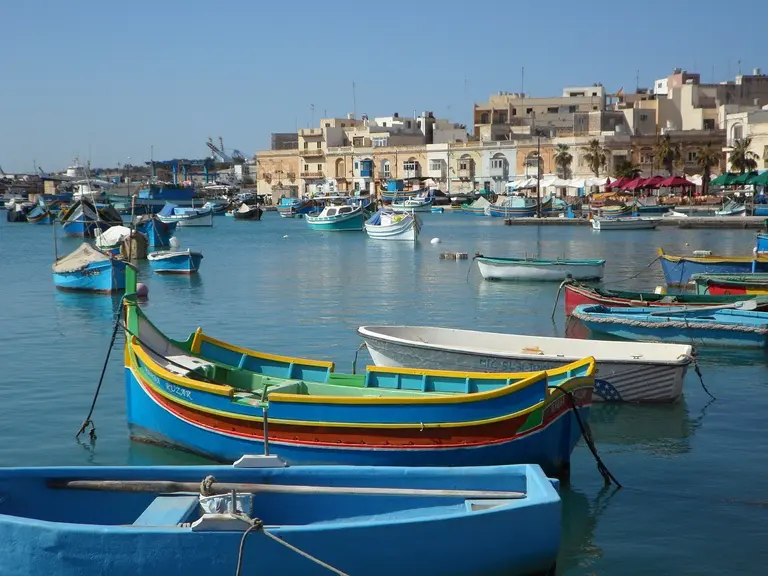
Important Update: Malta's Citizenship by Investment program was ruled unlawful by the EU Court of Justice on 29 April 2025 (Case C-181/23) and repealed by Malta in July 2025. The program is no longer accepting new applications. The information below is provided for historical reference only. For current EU options, consider Portugal's Golden Visa or Greece's Golden Visa, which give residence that can lead to citizenship after several years.
Movingto is a Portugal-first immigration firm that puts a named, Bar-registered lawyer from its in-house legal team on your case and publishes its fees.
For the Portugal Golden Visa, Movingto's fee is €6,000 flat, the same whichever qualifying fund you choose. It covers legal assistance from our in-house Portuguese immigration lawyers, Movingto administration, bank account opening and your NIF; AIMA's government fees are extra. Citizenship can follow after 10 years of legal residence, or 7 for EU and CPLP nationals, counted from first permit issue (Lei Orgânica 1/2026, checked 18 October 2026). See Portugal Golden Visa lawyer assistance, the Golden Visa service for Americans and our pricing. Movingto may receive commissions from some funds (how Movingto gets paid).
Pros (Historical):
- Full European Union citizenship
- Access to high-quality healthcare and education
- Visa-free travel to over 185 countries
Cons:
- Program repealed in July 2025
- Substantial financial contribution was required
- Minimum waiting period was 14 months
Nestled in the heart of the Mediterranean, Malta was a jewel for those seeking European citizenship. The advantages that accompanied Maltese citizenship included:
- Access to the European Union
- Visa-free travel to over 185 countries
- Right to live, work, and study in any EU country
- High standard of living
- Excellent healthcare and education systems
- Stable political and economic environment
- Attractive tax benefits
The Maltese program was comprehensive, requiring both a residency period and a significant financial outlay. While no longer available for new applicants, Malta remains an attractive destination for those seeking EU residency through other pathways.
Rating (Historical):
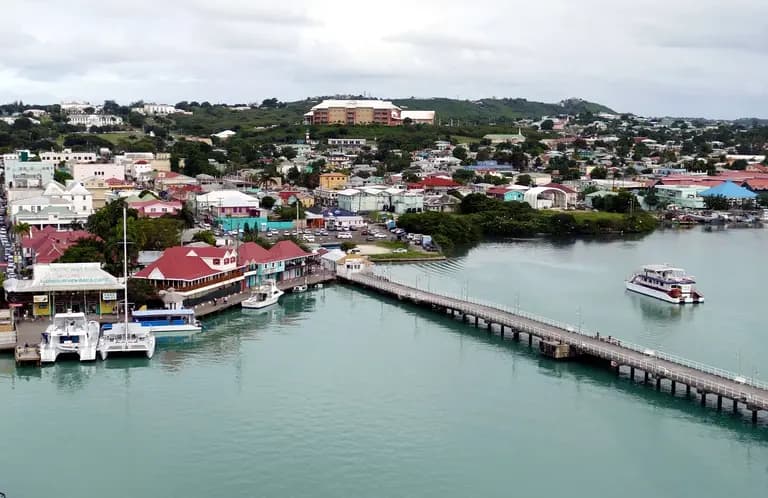
Best for Caribbean Lifestyle: Antigua and Barbuda
Pros:
- Processing typically within approximately 6 months
- Extensive visa-free travel to over 150 countries
- Donation route from US$230,000 (single applicant or family of four)
Cons:
- Real estate investment must be held for five years
- US visa still required (not visa-free); US visa restrictions reported from 1 Jan 2026 (Proclamation 10998)
Antigua & Barbuda runs one of the Caribbean's established citizenship-by-investment programmes, alongside options such as Grenada's.
The twin-island nation promotes an array of investment avenues, from charitable donations to real estate ventures. The processing time typically takes approximately 6 months. The cherry on top? A passport from Antigua and Barbuda provides access to over 150 countries visa-free or on arrival.
An Antigua & Barbuda passport does not grant visa-free entry to the United States. News reports say US Proclamation 10998 of 16 December 2025 restricted entry of Antiguan nationals on immigrant visas and on B-1/B-2, F, M and J visas from 1 January 2026, citing citizenship by investment without residence, while visas issued before then stayed valid; check the US Embassy in Bridgetown before relying on a US visa. The minimum investment is a US$230,000 National Development Fund donation (the same for a single applicant or a family of up to four), or US$300,000 in approved real estate, plus a US$10,000 processing fee for a single applicant (US$20,000 for a family of up to four) and due-diligence fees (Antigua and Barbuda CIU schedule of fees, checked 18 October 2026).
Best for Dual Citizenship: St. Kitts and Nevis

Pros:
- There are no restrictions on dual citizenship
- Inclusion of family members in the application
- Citizenship by descent for future generations
Cons:
- High investment threshold
- No direct benefits in Commonwealth countries, despite privileges
St. Kitts and Nevis is a sanctuary for those wishing to hold dual citizenship without having to renounce their current nationality. The twin-island nation respects your global identity and offers a citizenship-by-investment program that is among the most venerable—established in 1984, it is the world's oldest such program. What significance does this hold for you and your family?
Holding a passport from St. Kitts and Nevis is more than just having a travel document; it's about securing a legacy for your descendants. The program's inclusiveness allows for family members to be part of your citizenship journey, with the promise of generational passage. The Sustainable Island State Contribution is US$250,000 for a main applicant or a family of up to four, plus US$25,000 for each extra dependant under 18 and US$50,000 for each extra dependant aged 18 or over (St Kitts and Nevis CIU, checked 18 October 2026); approved real estate is reported at US$325,000 with a 7-year holding period.
As part of the Commonwealth, there are certain courtesies extended to its citizens, although these do not equate to tangible benefits in member states. Despite these considerations, the allure of St. Kitts and Nevis citizenship is undeniable, especially for those who value the continuity of their lineage.
Best for Middle Eastern Connection: Turkey
Pros:
- Diverse investment options, including foreign direct investment and investment programs
- Visa-free or visa-on-arrival access to more than 100 countries
- Profitable real estate market
Cons:
- Investment must be completed before citizenship approval
- Excludes parents and children over 18 from the program
Turkey's citizenship-by-investment programme requires a minimum US$400,000 real-estate investment and bridges Europe and the Middle East.
A Turkish passport gives visa-free or visa-on-arrival access to more than 100 countries (see the Henley table above), and Turkey holds an E-2 investor-visa treaty with the United States, which appeals to those seeking US business access. The property can be sold after a three-year holding period. The investment must be completed before the application is approved, and the programme does not extend to parents or to children over 18.
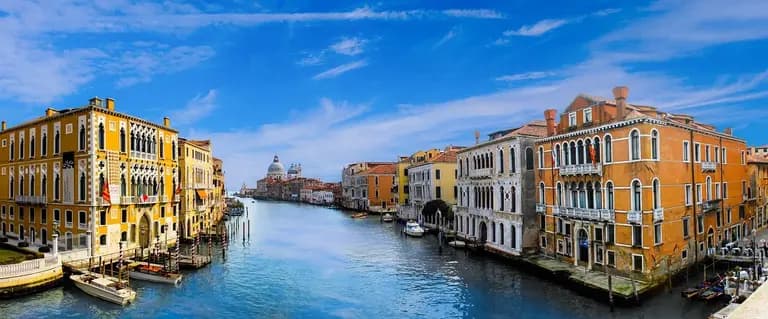
Best for Ancestral Heritage: Italy
Pros:
- Citizenship by descent for those with a qualifying Italian parent or grandparent
- Descendants can also naturalise after 2 years' legal residence in Italy
- Potential for EU citizenship
Cons:
- Two-generation limit since the 2025 reform (Law 74/2025): applicants born abroad with another citizenship now need a parent or grandparent who holds, or held at death, only Italian citizenship, or an Italian parent who lived in Italy for 2 continuous years before your birth
- Complex documentation requirements
Italy grants citizenship by descent (iure sanguinis) to people with Italian ancestry, and a recognised claim confers full EU citizenship.
A 2025 reform (Decree-Law 36/2025, in force 29 March 2025 and converted by Law 74/2025) limits citizenship by descent for people born abroad who hold another citizenship: you qualify only if you have a parent or grandparent who holds, or held at death, only Italian citizenship, or an Italian parent who lived in Italy for 2 continuous years before your birth (art. 3-bis of Law 91/1992, checked 18 October 2026). Claims filed, or consular appointments communicated, by 23:59 Rome time on 27 March 2025 keep the old unlimited-generations rules. The Constitutional Court upheld the new limit in 2026 (Sentenza 63/2026), and in July 2026 it referred a separate EU-law question to the EU Court of Justice (Order 147/2026), which is still pending. Pre-1948 maternal-line cases still go through the Italian courts but face the same limit for new filings. Documentation is demanding, and Italy has no citizenship-by-investment route.
Best for Natural Beauty: New Zealand
Pros:
- Processing time varies: simple cases take weeks, complex cases may take months
- Easy step towards a New Zealand passport
- High quality of life and welcoming community
Cons:
- Limited to those with New Zealand descent
- Additional expedited processing fees
- Processing times depend on complexity of documentation and verification requirements
New Zealand offers citizenship by descent to people with a New Zealand-citizen parent; for eligible applicants it is largely a registration step.
The process timeline varies depending on your circumstances. Simple cases with straightforward documentation may be resolved in weeks, while complex cases requiring additional verification can take several months. The advantages of this are manifold: a passport that opens doors worldwide, a quality of life that many dream of, and a community that embraces diversity. The limitations, however, are clear: this pathway is reserved for those with New Zealand blood. And for those in a rush, expedited processing comes at an extra cost. Nevertheless, for the right candidates, New Zealand citizenship is a canvas of opportunity, painted in the most vibrant of hues.
Best for Latin American Ties: Ecuador
Pros:
- Simplified process for those with Ecuadorian family ties
- Cultural integration through language and historical knowledge
- Citizenship after three years of permanent residency
Cons:
- Economic self-sufficiency requirements
- Must demonstrate proficiency in Spanish
Ecuador suits people with family ties to the country: spouses and children of Ecuadorians face a reduced residency requirement.
Ecuadorian citizenship requires three years of permanent residency, Spanish-language ability, and proof of economic self-sufficiency. The process is faster for applicants married to an Ecuadorian or with Ecuadorian children.
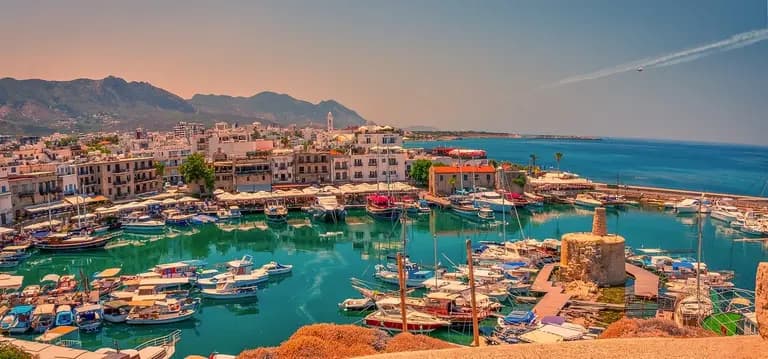
Best for Residency by Investment: Cyprus
Pros:
- Fast-track permanent residency application
- Potential for EU citizenship via naturalisation (8 years' residence)
- Strategic location for business
Cons:
- High investment requirement (€300,000 minimum)
- Long path to EU citizenship
Cyprus offers a Permanent Residency by Investment programme; its former Citizenship by Investment programme ended in November 2020. Permanent residency is a step toward living in the EU, but it is not citizenship, and approval times are often quoted at several months rather than weeks.
Cypriot citizenship (and therefore EU citizenship) by naturalisation generally requires 8 years of legal residence: residence in 8 of the last 11 years, including the 12 continuous months before applying, plus Greek at CEFR level B1. Highly skilled workers can qualify in 4 years (B1) or 5 years (A2) (European Commission migration news on the 2024 Cyprus law, checked 18 October 2026). The investor route grants permanent residency from EUR 300,000 in property, not citizenship, so the path to an EU passport is long-term.
Fast Naturalisation: Argentina
Pros:
Naturalisation after about 2 years' legal residence under Ley 346
Dual citizenship allowed; no language test
Cons:
Historically court-granted and often slower than the 2-year minimum
Parts of the 2025 reform (Decreto 366/2025) were struck down by Argentine courts in 2026
Argentina requires only 2 years of continuous legal residence to apply for naturalisation under Ley 346, with no language test and dual citizenship permitted. Decreto 366/2025 moved applications from the federal courts to the Dirección Nacional de Migraciones and announced an investment-based route, but several Argentine courts struck down parts of the decree in 2026, including the transfer of naturalisation away from federal judges, so check the current procedure before you apply. In practice naturalisation has often taken longer than the two-year minimum.
Latin American Naturalisation: Paraguay
Pros: Naturalisation after 3 years' permanent residence
In practice does not require renouncing your original nationality
Cons:
Granted through the courts via an attorney petition; timelines vary
The constitution formally allows dual nationality only through a reciprocity treaty
Paraguay requires 3 years of permanent residence before applying for naturalisation, plus proof of a lawful occupation or income and good conduct. The naturalisation certificate is granted through the courts on a petition filed by an attorney. The constitution formally permits dual nationality for naturalised citizens only through reciprocity treaties, but in practice Paraguay does not require renouncing the original citizenship.
Citizenship by Irish Ancestry: Ireland
Pros:
EU citizenship by descent through an Irish parent, or a grandparent born in Ireland
Dual citizenship allowed
Cons:
Foreign Births Register registration takes about 9 to 12 months and counts only from the date of registration
Beyond a grandparent, it works only if each generation registered before the next was born
If you were born abroad to a parent who was an Irish citizen born in Ireland, you are automatically an Irish citizen. If instead a grandparent was born in Ireland and neither parent was, you can claim citizenship by registering on the Foreign Births Register, which takes effect from the date of registration. A great-grandparent born in Ireland qualifies you only if your parent had already registered before you were born.
Citizenship by Polish Ancestry: Poland
Pros:
EU citizenship by descent with no fixed generational limit
Dual citizenship allowed
Cons: Requires proving an unbroken chain of Polish citizenship
The chain breaks if an ancestor lost citizenship before the next generation was born (especially before 1951)
Poland grants citizenship by descent: a child of a Polish-citizen parent is Polish at birth regardless of where they are born. There is no generational limit, but you must prove an unbroken chain of Polish citizenship to an ancestor through the official confirmation procedure. The chain breaks if an ancestor lost Polish citizenship before the next generation was born, most often by acquiring another nationality before the 1951 citizenship act.
How Do You Choose the Easiest Country for a Second Citizenship?
Choosing a second citizenship means weighing a few factors: how fast the process is, how much it costs, where the country is, and how complex the paperwork will be.
One might start by pondering the following factors when considering a country for immigration:
- The speed of the application process, as some countries offer quick resolutions while others require a more protracted engagement
- The financial aspect, with programs ranging from sizable donations to substantial real estate investments
- The geographic allure of a country, such as bustling streets or serene shores
- The complexity of the required paperwork
Consider your personal priorities and how they align with the different options available.
Yet, beyond the initial outlay and application details, one must weigh the tax implications of their new country, including capital gains tax and income tax. Will your global income be taxed, or only the income generated within these borders? This could significantly affect your financial planning. Likewise, consider the laws of your home country regarding dual citizenship; not all nations view multiple nationalities favorably.
Routes to a second passport vary. The main ones are:
- ancestral ties to Italy
- marriage
- investment
- naturalization
the avenues are as diverse as the applicants themselves. Equally important is the global perception of the country's passport you choose to pursue, for it will become part of your identity, potentially easing travel and visa applications in the future.
- Application Speed: Varies
- Financial Investment: Varies
- Geographic Appeal: Varies
- Personal Priorities: Varies
- Tax Considerations: Varies
Before you apply: dual nationality and tax
Two things to check before committing. First, dual citizenship: not every country lets you keep your original nationality, and some require you to renounce it, so confirm your home country's rules. Second, tax: a second citizenship can change your tax residency and reporting obligations (US citizens, for example, are taxed on worldwide income regardless of where they live). Treat the figures here as starting points and get advice from a qualified tax adviser and an immigration lawyer for your situation.
This guide covered the main routes to a second citizenship: investment, descent, and naturalisation, across the Caribbean, Europe, and Latin America. The right option depends on your budget, timeline, ancestry, and where you want to live. Rules and processing times change, so confirm the current requirements with the relevant government or a qualified professional before committing.
Related Movingto guides
Italian citizenship by descent: Italy citizenship guide
Portuguese citizenship: Portugal citizenship guide
Greek citizenship: Greece citizenship guide
Spanish citizenship: Spain citizenship guide
Greece Golden Visa: Greece Golden Visa service
Portugal Golden Visa: Portugal Golden Visa lawyer assistance
Italy investor visa: Italy Golden Visa service
Dual citizenship rules by country: how many citizenships you can hold
Caribbean (Grenada) citizenship by investment: Grenada CBI guide
Official sources
Italy: Law 91/1992, citizenship law incl. art. 3-bis (Normattiva)
Cyprus: naturalisation by residence (gov.cy)
Antigua & Barbuda: CIP schedule of fees
United States: B-1/B-2 visa reciprocity (State Dept)
Vanuatu: Citizenship Office fees
St. Kitts & Nevis: CIU contribution and fees
Ireland: Foreign Births Register (gov.ie)
Poland: confirmation of Polish citizenship (gov.pl)
Argentina: Ley 346 (official text)
Passport mobility: Henley Passport Index 2026