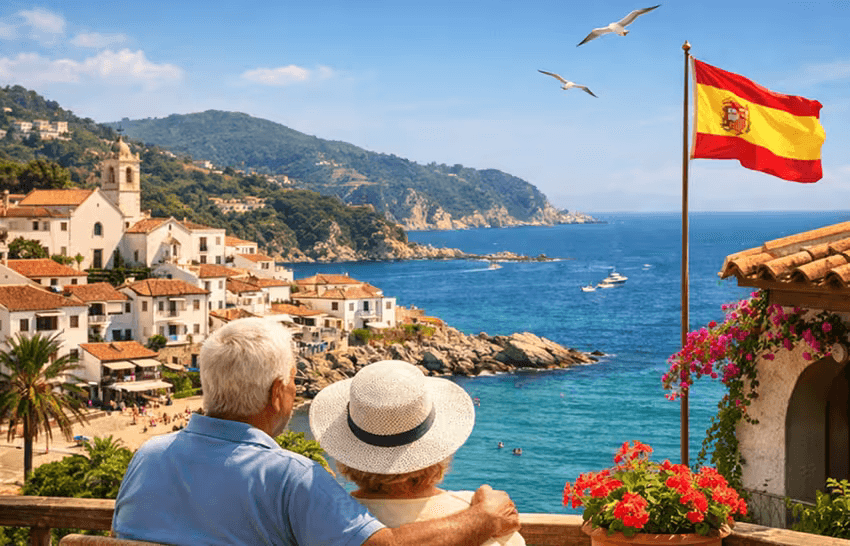
Quick Answer: Spain is one of Europe's most popular retirement destinations, offering excellent healthcare, low cost of living (€1,500-2,500/month in most areas), 300+ days of sunshine, and a relaxed lifestyle. Non-EU retirees typically need a Non-Lucrative Visa (proving €2,400+/month passive income), while EU citizens can retire freely with proof of income and health insurance.
Legal support note:
Retirees using the Non-Lucrative Visa may self-file when the case is simple, but borderline income, dependants, insurance wording, or prior immigration issues are good reasons to review
immigration lawyer options in Spain
first.
Why Retire in Spain?
Quick Answer: Spain offers retirees affordable living costs 30-40% lower than Northern Europe or the US, world-class healthcare ranked 7th globally, exceptional climate with 300+ sunny days annually, and a culture that celebrates leisure, food, and community.
Spain consistently ranks among the top retirement destinations worldwide, and for good reason. The country combines European infrastructure and healthcare with Mediterranean lifestyle and climate at a fraction of the cost of living in the UK, Germany, or the United States.
Key benefits for retirees:
- Excellent healthcare: Spain's public healthcare is ranked 7th in the world by WHO
- Affordable living: Cost of living 30-40% lower than UK/US
- Climate: 300+ days of sunshine, mild winters (especially on coasts)
- Quality of life: Strong café culture, outdoor lifestyle, family values
- Safety: Low crime rates, very safe for expats
- Infrastructure: Excellent roads, rail, airports across the country
- Established expat communities: Large retiree populations especially on costas
- Cuisine: Fresh Mediterranean diet, affordable dining
Potential challenges to consider:
- Spanish bureaucracy can be slow and frustrating
- Language barrier outside tourist areas
- Summer heat can be extreme inland
- Tax implications on worldwide income as a resident
Visa Options for Retirees
Quick Answer: EU citizens can retire in Spain freely by registering as residents after 90 days. Non-EU retirees typically use the Non-Lucrative Visa, which requires proof of passive income (~€2,400/month) and private health insurance, with no work permitted.
| Visa Type | Who It's For | Income Required | Can Work? |
|---|---|---|---|
| EU Citizen Registration | EU/EEA/Swiss nationals | Sufficient means + insurance | Yes |
| Non-Lucrative Visa | Non-EU retirees | €28,800/year (~€2,400/mo) | No |
| Golden Visa | Property investors | €500,000 property purchase | Yes |
| Family Reunification | Family of Spanish/EU residents | Varies by sponsor | Depends |
Non-Lucrative Visa (Most Common for Retirees):
- Must prove passive income of 400% of Spain's IPREM indicator (~€2,400/month in 2026)
- Add 100% IPREM per dependent (~€600/month)
- Private health insurance required (no copays, full coverage)
- Cannot work in Spain (hence "non-lucrative")
- Initial 1-year visa, renewable for 2-year periods
- Leads to permanent residency after 5 years
EU Citizens:
- No visa required—just register as resident after 90 days
- Need NIE number and EU Registration Certificate
- Must show sufficient funds (pension, savings) AND health insurance
- Can access public healthcare if in receipt of state pension from another EU country (S1 form)
Best Places to Retire in Spain
Quick Answer: The Costa del Sol (Malaga area) and Costa Blanca (Alicante area) are most popular for their climate and expat communities. For culture seekers, Seville and Granada offer authentic Spanish life at lower costs. The Canary Islands provide year-round mild weather.
| Location | Monthly Budget | Climate | Best For |
|---|---|---|---|
| Costa del Sol (Malaga) | €1,800-2,500 | Hot summers, mild winters | Beach lovers, golf, large expat community |
| Costa Blanca (Alicante) | €1,500-2,200 | 300+ sunny days | Budget-conscious, healthcare, established expats |
| Valencia | €1,600-2,300 | Mediterranean | City + beach, arts, paella |
| Seville | €1,400-2,000 | Hot summers, mild winters | Culture, history, flamenco |
| Granada | €1,200-1,700 | Mountain climate | Budget living, mountains + coast |
| Canary Islands | €1,500-2,200 | Eternal spring (20-25°C) | Year-round mild weather |
| Madrid | €2,000-3,000 | Hot summers, cold winters | Urban culture, excellent healthcare |
| Mallorca | €1,800-2,800 | Mediterranean | Island life, nature, upscale |
Popular retirement areas:
- Costa del Sol: Marbella, Fuengirola, Benalmádena, Torremolinos, Nerja
- Costa Blanca: Benidorm, Javea, Moraira, Denia, Altea
- Costa Brava: Near Barcelona, hillier and less developed
- Canary Islands: Tenerife (largest expat community), Gran Canaria, Lanzarote
Cost of Living for Retirees
Quick Answer: A comfortable retirement in Spain costs €1,500-2,500/month for a couple, including rent. Coastal tourist areas are pricier; inland cities and villages offer significant savings. Budget €800-1,200/month for a single person in affordable areas.
Monthly costs breakdown (couple, comfortable lifestyle):
| Expense Category | Coastal Town | Inland City | Village/Rural |
|---|---|---|---|
| Rent (2-bed apartment) | €900-1,400 | €600-900 | €400-600 |
| Utilities (electric, gas, water) | €100-150 | €80-120 | €60-100 |
| Groceries | €400-500 | €350-450 | €300-400 |
| Dining out (weekly) | €200-300 | €150-250 | €100-150 |
| Health insurance | €200-400 | €200-400 | €200-400 |
| Transport | €100-200 | €80-150 | €50-100 |
| Entertainment/misc | €200-300 | €150-250 | €100-200 |
| TOTAL | €2,100-3,250 | €1,610-2,520 | €1,210-1,950 |
Cost-saving tips for retirees:
- Rent before buying to test different areas
- Consider inland locations (30-50% cheaper than coast)
- Shop at local markets (mercados) for fresh produce
- Take advantage of "menú del día" lunches (€10-15 for 3 courses)
- Use public transport or cycle—many coastal towns are walkable
- Join local clubs for free/cheap activities
Healthcare for Retirees in Spain
Quick Answer: Retirees can access Spain's excellent public healthcare through the convenio especial (voluntary contribution ~€60-157/month) or use private insurance (€100-400/month depending on age). EU pensioners can use their S1 form for free public healthcare access.
Healthcare options:
| Option | Monthly Cost | Coverage | Who Qualifies |
|---|---|---|---|
| EU S1 Form | Free | Full public healthcare | EU state pensioners |
| Convenio Especial | €60-157 | Full public healthcare | Legal residents not otherwise covered |
| Private Insurance | €100-400 | Private hospitals, shorter waits | Anyone (required for visa) |
For EU pensioners (S1 Form):
- Request S1 from your home country's health authority before moving
- Register S1 at local INSS (Social Security) office in Spain
- Receive full access to Spanish public healthcare
- Spain bills your home country for your care
For non-EU retirees:
- Private insurance required for visa application
- After gaining residency, can join convenio especial for public access
- Many maintain both public and private coverage
Private insurance considerations for seniors:
- Premiums increase significantly after age 65-70
- Many policies have age cutoffs (70-75 for new customers)
- Pre-existing conditions may not be covered initially
- Popular insurers: Sanitas, Adeslas, ASISA, DKV, Cigna
Read our full guide to Spain's healthcare system for detailed information on accessing medical care.
Taxes for Retirees in Spain
Quick Answer: Spanish tax residents pay income tax on worldwide income, including pensions, at progressive rates from 19-47%. Many countries have tax treaties to avoid double taxation on pensions. The Beckham Law is generally not available to retirees as it requires employment or self-employment.
Spanish income tax rates (2026):
| Income Band | Tax Rate |
|---|---|
| Up to €12,450 | 19% |
| €12,450 - €20,199 | 24% |
| €20,200 - €35,199 | 30% |
| €35,200 - €59,999 | 37% |
| €60,000 - €299,999 | 45% |
| €300,000+ | 47% |
Pension taxation:
- State pensions (government): Often taxed only in the country of origin (check tax treaty)
- Private pensions: Generally taxed in Spain as resident
- US Social Security: Taxed only in the US under US-Spain tax treaty
- UK State Pension: Taxed only in Spain (where you're resident)
Other taxes to consider:
- Wealth tax: 0.2-3.5% on net assets over €700,000 (varies by region)
- Property tax (IBI): Annual municipal tax on property ownership
- Capital gains: 19-26% on investments/property sales
- Inheritance tax: Varies by region and relationship to deceased
See our comprehensive guide on taxes in Spain for detailed information.
Buying Property as a Retiree
Quick Answer: Non-residents can buy property in Spain freely. Expect to pay 10-15% of the purchase price in taxes and fees (transfer tax, notary, lawyer, registration). Spanish mortgages are available to non-residents up to around 60-70% LTV.
Property purchase costs:
| Cost | Percentage | Notes |
|---|---|---|
| Transfer Tax (ITP) | 6-10% | Varies by region; for resale properties |
| VAT (IVA) | 10% | For new-build properties only |
| Stamp Duty (AJD) | 0.5-1.5% | Varies by region |
| Notary fees | 0.5-1% | Based on property value |
| Land registry | 0.3-0.5% | Registration of deed |
| Legal fees | 1-1.5% | Independent lawyer (essential) |
Read our detailed guide on how to buy property in Spain and understand all buying costs.
Tips for retiree property buyers:
- Rent first for 6-12 months to test the area
- Consider accessibility (stairs, medical facilities nearby)
- Check community fees (comunidad) for apartments
- Verify legal status of property (especially rural areas)
- Always use an independent lawyer (not seller's)
- Visit in different seasons—summer crowds and winter weather vary dramatically
Making Friends and Building Community
Quick Answer: Spain has well-established expat communities, especially on the coasts, with clubs, social groups, and activities specifically for retirees. Learning Spanish opens doors to local friendships and deeper integration into Spanish culture.
Ways to meet people:
- Expat clubs: British, American, international clubs in most retirement areas
- Golf clubs: Major social hubs, especially Costa del Sol
- Walking groups: Popular activity for active retirees
- Language exchanges: Meet Spaniards wanting to practice English
- Volunteering: Animal shelters, food banks, community projects
- Sports clubs: Tennis, bowls, swimming, petanque
- Church communities: English-speaking congregations in expat areas
- Art and craft groups: Painting, pottery, photography
Learning Spanish:
While you can get by with English in expat-heavy areas, learning Spanish dramatically improves your experience:
- Free/low-cost classes at local community centers
- Online resources (Duolingo, Babbel, YouTube)
- Language schools offer intensive courses
- One-on-one tutoring (€15-25/hour)
- Daily practice with shopkeepers and neighbors
Practical Considerations for Retirees
Quick Answer: Key practical steps include getting your NIE number, opening a Spanish bank account, arranging health insurance, registering with your embassy, and setting up utilities. A local gestor (administrative assistant) can help navigate Spanish bureaucracy.
Essential setup checklist:
- Obtain NIE number (required for everything)
- Open Spanish bank account
- Arrange health insurance
- Register on Padrón (municipal census)
- Set up utilities (can use NIE)
- Get Spanish phone/mobile plan
- Register with consulate/embassy
- Arrange international driver's license or exchange license
- Set up tax affairs (may need fiscal representative)
Driving in Spain:
- EU licenses valid indefinitely
- UK licenses valid for 6 months, then must exchange
- US licenses require exchange after becoming resident (some states have reciprocal agreements)
- Many retirees find they don't need a car in well-served coastal towns
Pets:
- EU Pet Passport for dogs/cats from EU countries
- Non-EU: veterinary certificate, microchip, rabies vaccination
- Spain is very pet-friendly; many cafés and restaurants welcome dogs